
How to Measure Digital Transformation ROI
Struggling to measure digital transformation ROI? Discover the key metrics that matter, how to track success, and pitfalls to avoid for better project outcomes.
Asyar-team

How to Measure Digital Transformation ROI [Guide]
One of the hardest challenges companies face is measuring digital transformation ROI. While leadership approves budgets and expects results, teams often struggle to quantify value.
70% of large-scale transformations fail to meet their objectives, according to McKinsey. The reason? Leaders rarely define what success looks like before they start.
Success metrics vary by organization. A bank tracking fraud-detection accuracy requires a different framework than a ministry measuring citizen service times.
Without a clear measurement framework, ROI becomes a guess. For Saudi organizations highly investing in digitization under Vision 2030, digital transformation ROI needs to be front and center.
In this article, we’ll cover why measuring digital transformation ROI is difficult, what to track, how to calculate it, and the mistakes that can skew the numbers.
Why Is Measuring Digital Transformation ROI So Difficult?
Three reasons explain the gap between investment and proof of return.
Indirect benefits are hard to track
Digital transformation benefits are often indirect and harder to track.
Take a company that automates its invoice approval process. Processing time drops from five days to one. On its own, that's not a financial figure.
The benefit only becomes visible once leadership tracks what that faster cycle makes possible, like
Earlier vendor discounts
Faster project starts
Fewer late payment penalties
Without that extra layer of tracking, leadership can’t measure the ROI of their transformation.
Transformation isn't a single project
A retailer that migrates to a new Enterprise Resource Planning (ERP) system doesn't finish when the system goes live.
Over the next 18 months, the team:
Integrates the system with their logistics software
Manages to retrain staff across departments
Adjusts reporting workflows as gaps surface
Sees a drop in licensing and training costs
Meanwhile, productivity improves, and the company reviews the changes in financials. That said, they must have a baseline to track their transformation ROI against.
Further reading: 31 Digital Transformation Statistics for Saudi Arabia [2026]
Leaders expect instant results
Often, companies expect instant results, whereas the process can take months or years in some organizations.
For example, a company that replaces a legacy scheduling tool with a cloud-based platform might expect efficiency gains in the first quarter.
When results don't appear on schedule, executives label the project a failure. The work simply hasn't had time to pay off.
That gap between visible cost and delayed benefit makes leadership nervous and justification harder.
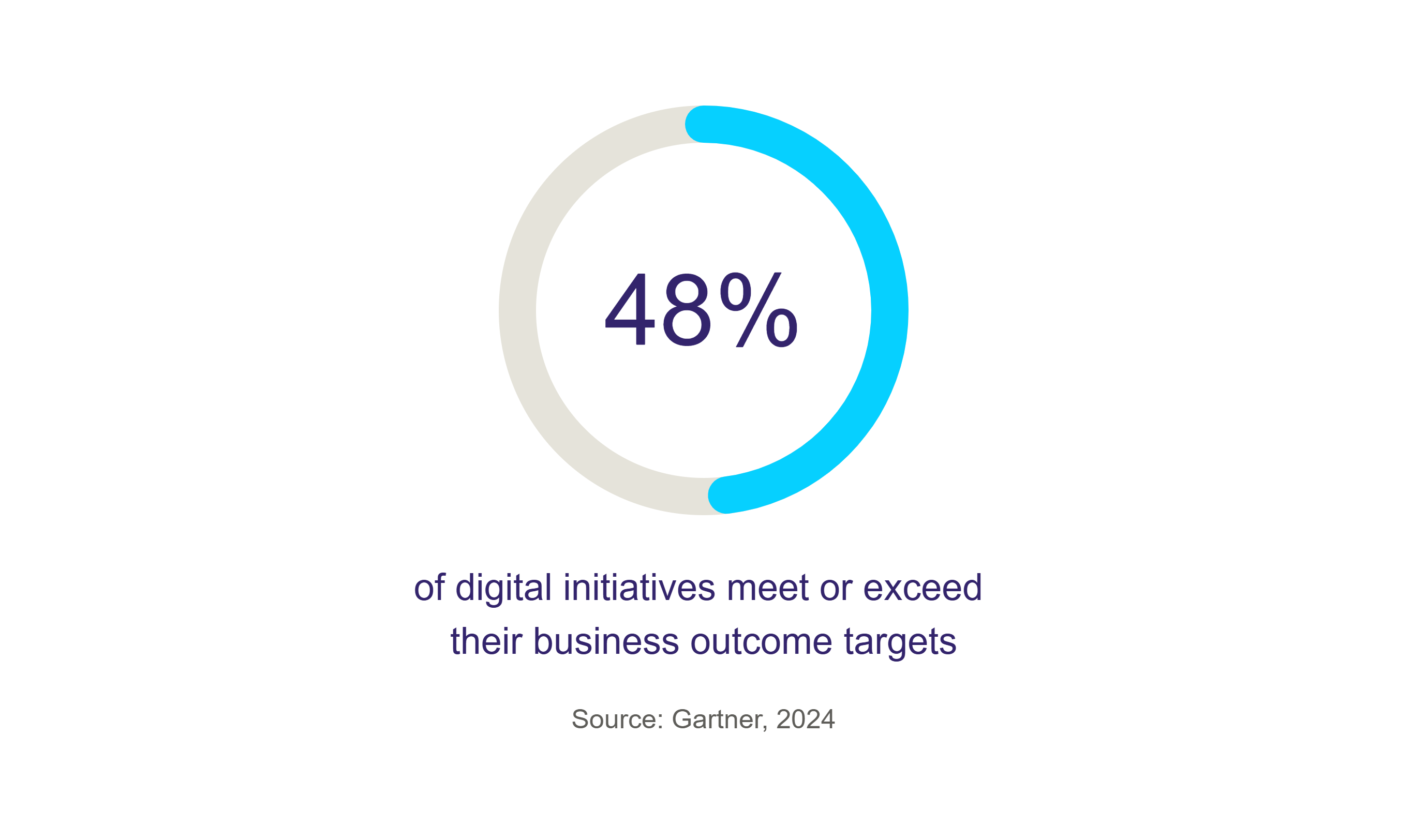
Only 48% of digital initiatives meet or exceed their business outcome targets, according to a Gartner survey of 3,100 CIOs and technology executives.
The fix isn't waiting for results to materialize. It's setting the right timeline and metrics to measure from day one.
What Metrics Capture Digital Transformation ROI?
For many organizations, digital transformation starts with upgrading legacy systems. While a solid first step, it’s only one piece of the puzzle.
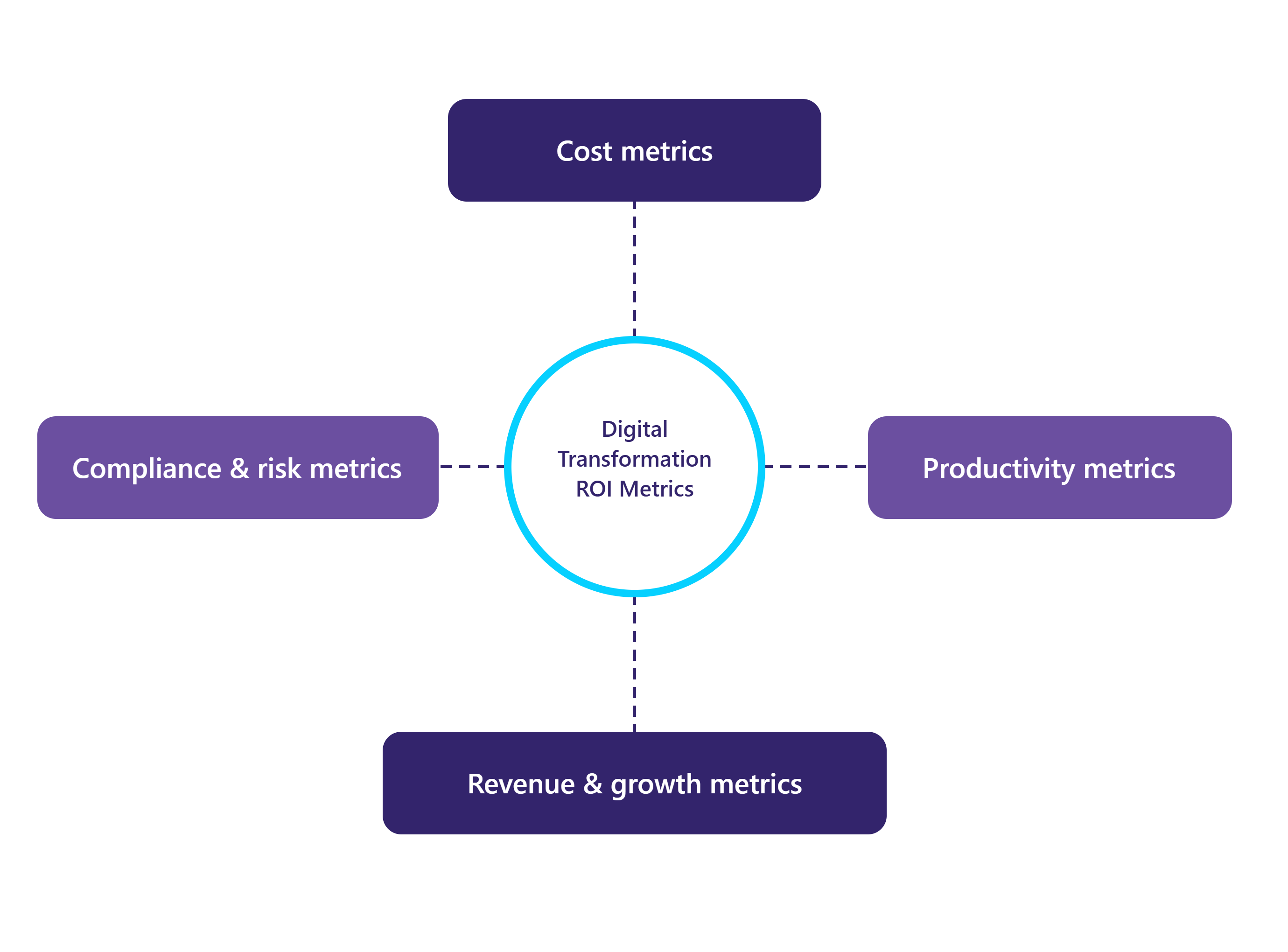
Core metrics for measuring digital transformation ROI cover four categories: cost, productivity, revenue and growth, and compliance and risk.
Cost metrics
Cost metrics capture what your organization stops spending on once you put new systems and processes in place.
They're the easiest category to defend in a budget conversation, since they map directly to numbers finance already tracks. They include:
Reduction in IT operational costs
Less manual processing time and labor hours
Reduction in system downtime
Productivity metrics
Productivity metrics show whether digitized workflows are actually moving faster and whether that speed translates into business value.
They're harder to sell to the board than cost metrics. A 30% reduction in invoice processing time is measurable. But unless that time is redirected to higher-value work or reduces the need for additional headcount, the business impact stays invisible.
It's best to measure:
Process cycle times before and after implementation
Employee output per hour on digitized workflows
The metric only becomes meaningful once you can show what the saved time made possible.
Revenue and growth metrics
This is the category boards ask about first, and the hardest to attribute cleanly to the transformation itself.
A new digital channel might drive revenue. So might a pricing change, or a new sales hire, be launched in the same quarter.
Isolating the transformation's actual contribution matters more here than anywhere else. Key metrics include:
Time-to-market for new services
Revenue from new digital channels
Customer retention or conversion rate on digitized customer journeys
Compliance and risk metrics
For Saudi organizations, this category carries particular weight under the Personal Data Protection Law (PDPL) and National Cybersecurity Authority (NCA) requirements.
Apart from the SAR 5 million fine, a failed audit can delay a public-sector contract or trigger a full compliance review.
Despite that, compliance metrics often get less attention than cost or revenue. They don't show up until something goes wrong.
When looking at compliance and risk metrics, consider
Number of audit findings before and after implementation
Reduction in compliance-related incidents
For government entities, revenue metrics rarely apply. Swap them for service delivery metrics instead, like number of citizen requests processed, resolution time, and service availability.
Further reading: How to Make a Business More Efficient: 2026 Strategies for Sustainable Growth in Saudi Arabia
How to Calculate Digital Transformation ROI
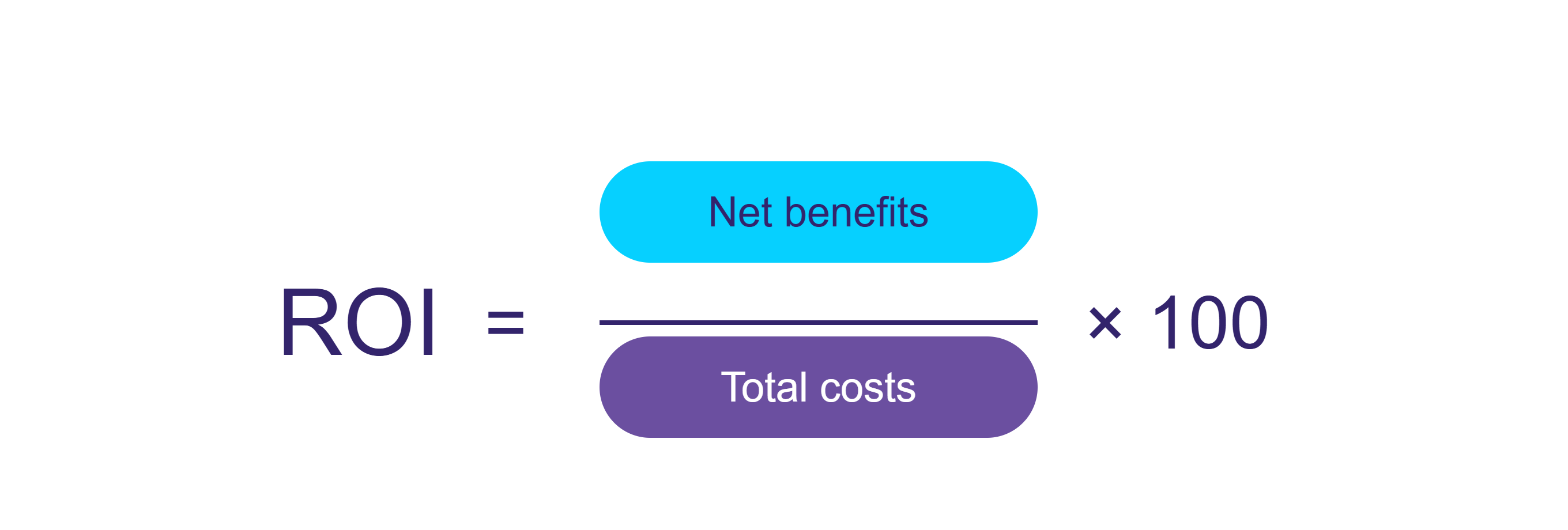
To calculate ROI, divide net benefits by total costs, then multiply the result by 100.
However, the challenge is defining both sides correctly.
Total costs include:
Project implementation
Training and change management
Ongoing licensing
The productivity dip during transition
Net benefits should account for hard and soft savings. Hard savings are measurable cost reductions, such as lower headcount needs, reduced downtime, and fewer manual hours.
Meanwhile, soft savings are harder to quantify but are just as real. They include time recovered, errors avoided, and decisions made faster.
Set a realistic payback window before you start. McKinsey notes that transformation value generally appears within six to 36 months, depending on the domain.
Expecting returns in less than six months sets leadership up for premature, and often wrong, conclusions.
That’s why you need to establish a baseline before the project starts. Without data on how things worked before, there's nothing to measure improvement against.
Common Digital Transformation ROI Mistakes that Negatively Impact the Numbers
Measurement errors are common and compound. Only 12% of business transformations achieve their original ambitions, according to Bain & Company. Most of the gap comes down to four recurring errors in companies trying to measure ROI.
Measuring too early
New systems need time to take effect. Employees are still learning, integrations are not fully tuned, and early data reflects disruption rather than steady-state performance. Measuring ROI at month three captures the dip, not the gain.
Ignoring intangible benefits
Faster decisions, fewer errors, and improved employee experience rarely show up as a single line item. Excluding them from the calculation doesn't make ROI more accurate. It makes it incomplete and consistently lower than reality.
Crediting the technology alone
Most transformations bundle new technology with new processes, retraining, and reorganized teams. If a workflow improves, the redesign deserves as much credit as the software. Crediting the technology only overstates its real contribution.
Benchmarking against the wrong baseline
A global average payback period or adoption rate doesn't reflect Saudi market conditions, regulatory requirements, or labor costs.
Comparing against global benchmarks produces a misleading picture. Comparing against the organization's prior baseline yields the right result.
Start Measuring Digital Transformation ROI Today
Most organizations measure digital transformation ROI too late, after the budget is spent and the results are in. The ones that get it right treat measurement as part of the design, not a review at the end.
With over 20 years of combined experience building IT infrastructure for Saudi enterprises and government entities, Asyar’s experts design transformation roadmaps with built-in measurement from day one.
How will you know your transformation worked? That question needs an answer before the first riyal is approved, not after the results come in.
That's where Asyar starts.
Book a call with Asyar to build a digital transformation roadmap with measurable ROI from day one.